Need-based Scholarship: awarding support by financial circumstance

Definition

A need-based scholarship is awarded according to a student's financial circumstances, directing support to those who could not otherwise afford their education.

It requires collecting and assessing financial information consistently and securely, which makes a structured, privacy-conscious application process essential.

Scholarships
Published on
July 29, 2026
AI Summary
Summarize this page with AI

What is a need-based scholarship?

A need-based scholarship is awarded primarily on the basis of a student's demonstrated financial need rather than their achievements. Eligibility typically rests on evidence such as family income, household size and a student's ability to pay for their education.

Its purpose is access. Where a merit award recognises excellence, a need-based scholarship exists to remove financial barriers, supporting students who show promise but might not otherwise be able to afford to study. That difference in purpose shapes everything about how it is run.

‍

How is it different from a merit-based scholarship?

The contrast with a merit-based scholarship is one of basis. A need-based award is decided on financial circumstances; a merit award is decided on achievement or potential. One responds to how much support a student needs, the other to how strong a candidate they are.

The two are frequently combined, with need used to prioritise among candidates who already meet a merit threshold, but the distinction remains important. It determines what a program must collect from applicants and how it judges between them, financial evidence in one case, accomplishment in the other.

‍

What data does a need-based scholarship involve?

Need-based programs handle sensitive personal and financial information: evidence of income, household circumstances, and sometimes tax or benefit documentation. This is more delicate than the grades or portfolios a merit program collects, and it raises the stakes on confidentiality.

It also makes fair assessment harder. Financial need does not reduce to a single comparable number the way a test score does, so a program needs a clear, consistent framework for weighing very different personal situations against each other, applied the same way for every applicant.

‍

Running a need-based program in a platform

A grant management software platform collects financial evidence through a secure application form, applies consistent need criteria, and protects sensitive data in line with data-protection obligations, so a need-based program is both equitable and safe to run at scale.

Summary
FAQ

Frequently Asked Questions

What is a need-based scholarship?
icon lessicon less
How is it different from a merit-based scholarship?
icon lessicon less
What data does a need-based scholarship involve?
icon lessicon less
How do funders assess financial need fairly?
icon lessicon less
Show more

Related terms

The newest terms we've added, the words teams managing grants, sponsorship, and CSR come across most often.

Grant Management

Pre-Award

Pre-award is the first phase of the grant lifecycle: publishing the call, receiving applications, checking eligibility, scoring and shortlisting — everything that happens before funds are committed.

Pre-award decides a funder's selectivity. How many ineligible applications reach human reviewers, and how consistently the eligible ones are scored, is settled in this phase and cannot be repaired in the next one.

Read the term
Grant Management

Scoring Rubric

A scoring rubric is the document that defines what reviewers assess in an application, the scale they use for each criterion, and how much each criterion counts toward the total score.

The rubric is the instrument; scoring is the act of using it. Publishing it with the call lets applicants address the criteria directly, and keeping it on file lets a funder explain a decision months after it was made.

Read the term
Grant Management

Application Form

An application form is the structured means by which a funder collects the information it needs from applicants, ideally with conditional logic, document uploads and built-in eligibility checks.

A well-designed form improves data quality, screens out ineligible requests early and makes every subsequent stage of evaluation faster and more consistent.

Read the term

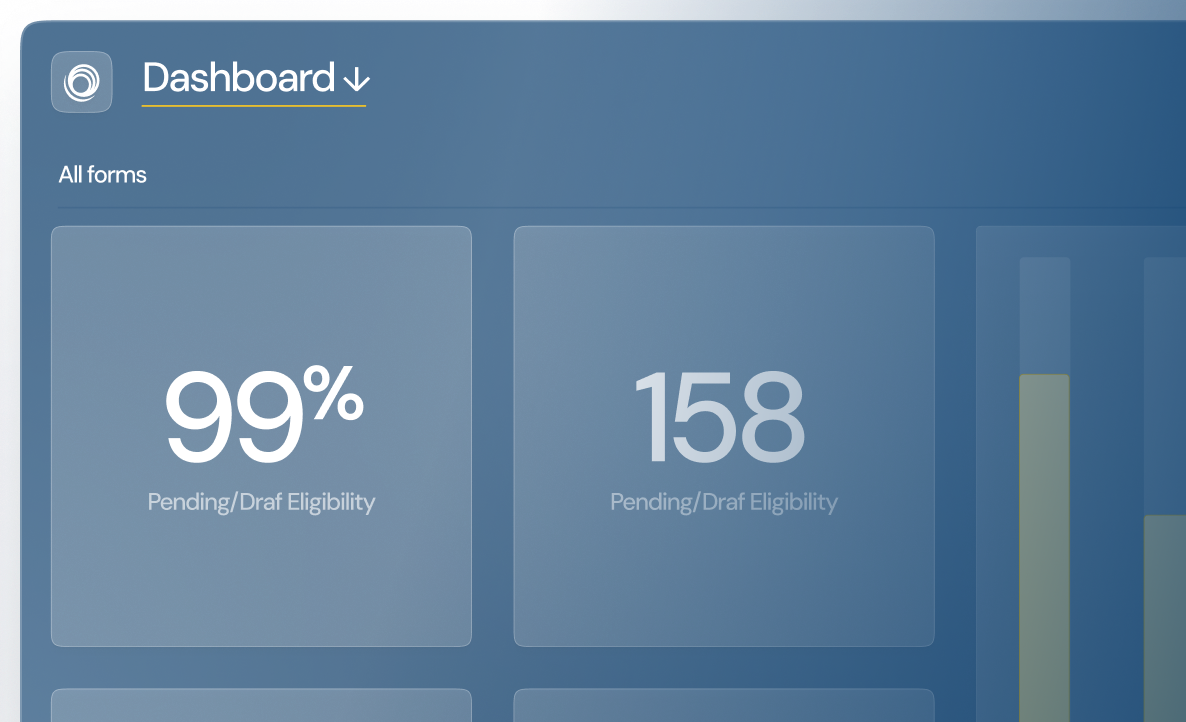
Want to see how this dashboard works?

Book a 15-minute demo and we'll show you the exact setup our client uses to track 15+ regional programs.
Optimy Dashboard mockup