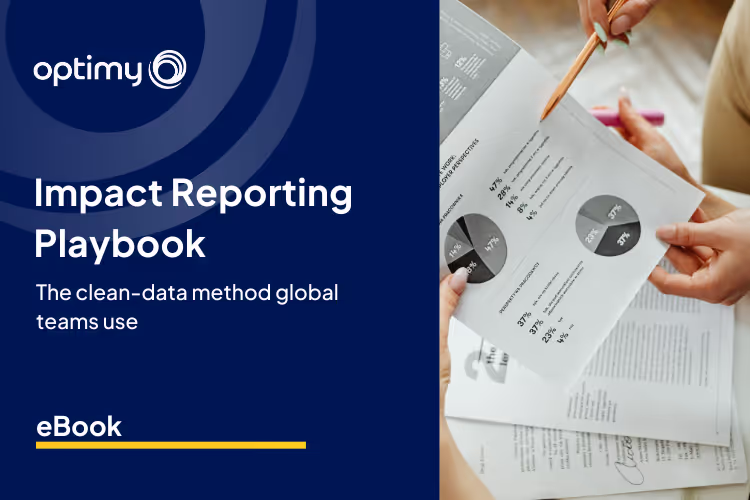

About this Ebook
The Optimy Problem-Solving Playbooks are built for global teams that need reliable reporting across programs and regions.
This edition reveals why impact reporting fails in large corporations and corporate foundations: inconsistent data formats, incompatible KPIs, manual reconciliation, and fragmented systems that cannot enforce standardization.
Instead of patching dashboards at the end of each cycle, high-performing teams remove variation at the source using taxonomy governance, structured intake, and automated data consolidation.
What You’ll Learn
• How to eliminate inconsistent inputs and unify reporting formats
• How to implement a KPI taxonomy that standardizes metrics across programs
• How mandatory submission rules strengthen comparability and accuracy
• How automated ingestion pipelines reduce manual stitching and audit risk
• Tools you need to solve this
Download the eBook today! 🚀
Frequently Asked Questions

Other Ebooks
More practical guides for teams that run grant, sponsorship and volunteering programs and have to report on their impact. Pick the next one that fits your challenge.
How to run more Grants with less effort
Learn how to gain operational efficiency in grant management by removing manual work, reducing rework, and building systems that scale without increasing cost or risk.
How to evaluate the real impact of your grant program
Learn how to evaluate the real impact of your grant program by embedding measurability, ROI logic, and decision-ready data into day-to-day operations.

Security & Compliance in Corporate Volunteering
Learn where security and compliance gaps emerge in corporate volunteering and how identity decisions determine exposure long before incidents occur.