Sponsorship Management: What It Is, Why It Matters, and How to Do It Right
Sponsorship management means organizing every stage of a partnership to deliver value to everyone involved. It covers the planning, negotiation, execution, and evaluation of sponsorships, with one goal in mind: ensuring each initiative supports your brand’s strategy and delivers visible results.
In practice, this includes choosing the right opportunities, aligning them with your company’s goals, managing budgets and deliverables, and tracking the impact with real data. When managed this way, sponsorships stop being isolated marketing actions and start becoming part of a consistent business plan.
Audiences today pay attention to what brands stand for. They expect coherence between what a company says and what it supports. A well-managed sponsorship reinforces that credibility. One that isn’t quickly feels disconnected.
That’s why companies are treating sponsorship management as a discipline of its own: something that combines communication, analytics, and relationship building to create real brand value.
How Sponsorship Management Helps Your Business

A sponsorship can influence how people see your brand, the partners you attract, and the communities you reach. When managed strategically, it becomes a measurable way to grow awareness and strengthen reputation.
Research shows that the global sponsorship market has already passed 120 billion dollars, and that companies using dedicated tools to manage sponsorships report higher ROI and better partner retention. The reason is simple: data replaces guesswork.
Managing sponsorships properly helps you:
- Select opportunities that fit your audience and purpose
- Build stronger, long-term relationships with partners
- Control budgets and deliverables in one place
- Track ROI through measurable outcomes
Each of these steps turns a sponsorship from a cost into an investment. When your partnerships are aligned, traceable, and goal-oriented, the brand gains visibility while maintaining credibility.
Sponsorship Management vs Event Management
Sponsorship management and event management often work side by side, but they are not the same thing.
- Event management focuses on logistics: choosing venues, handling operations, and ensuring that everything runs as planned.
- Sponsorship management deals with strategy: defining objectives, selecting the right partners, and making sure each collaboration delivers real business impact.
Both areas require coordination, but their outcomes are different. Event management ends when the activity is over. Sponsorship management continues as the relationship evolves.
The success happens when both teams work together: the event team delivers the experience, and the sponsorship team turns that experience into measurable value.
Many organizations still treat sponsorships as one-off activations handled by event staff. That approach limits results. When sponsorship management is seen as a long-term strategic process, it aligns marketing, CSR, and finance toward shared goals. This shift is what allows companies to prove the value of their partnerships and make better investment decisions in the future.
Sponsorship Management Today: Building Real Connections and Lasting Value
Modern sponsorship management is centered on relationships built through trust, transparency, and data. Brands no longer look for visibility alone; they want to engage audiences in ways that reflect their values and create meaningful experiences.
This requires understanding both sides of the equation. Sponsors need clarity about what outcomes they expect, while partners need to know what success looks like for the brand. When expectations are aligned, partnerships grow stronger and performance improves.
Companies that excel at sponsorship management share a few habits in common:
- They define clear metrics before signing an agreement.
- They communicate openly and consistently throughout the partnership.
- They evaluate every collaboration with concrete data, not assumptions.
Technology now plays a central role in this process. Platforms like Optimy help teams collect insights, manage communication, and report on ROI in real time. Instead of scattered emails or spreadsheets, everything stays centralized — goals, budgets, deliverables, and outcomes.
The result is a smarter, more connected approach where sponsorships become stories worth telling and data supports every decision.
Understanding the Sponsorship Management Process
Managing sponsorships means organizing every part of the process, from defining goals to evaluating impact, in a way that connects business priorities with brand purpose.
Each step builds on the previous one, creating a loop that improves over time.
The process usually includes five main stages:
A strong sponsorship management process ensures transparency and consistency. It also prevents common mistakes like investing in disconnected projects or repeating campaigns without evidence of impact.
When each step is documented and measured, sponsorships evolve from isolated initiatives into structured programs that show long-term results.
The 4 Main Types of Sponsorships
Choosing the right type of sponsorship depends on what your company wants to achieve and how you measure success. While there are many possible formats, most sponsorships fall into four main categories: financial, media, in-kind, and promotional.
Contact us or request a demo to connect your sponsorship efforts with brand impact, all backed by real data.
Each type can work independently or in combination. The key is knowing which format aligns best with your audience, budget, and goals.
For example, large corporations often mix financial and media sponsorships for reach and visibility, while foundations tend to focus on in-kind or community-based collaborations that reinforce their values.
The goal is not to sponsor more, but to sponsor better: building partnerships that create measurable results and genuine connections.
Building a Sponsorship Management System That Works
A sponsorship management system brings structure and visibility to every part of your program. It connects teams, budgets, deliverables, and reporting inside a single workflow. Instead of scattered spreadsheets and endless follow-ups, everything happens in one place.
A good system has three goals:
- Keep information centralized and accessible.
- Automate repetitive tasks to save time.
- Track results with real data and clear metrics.
The most effective programs are built on clarity. You define who is responsible for what, set measurable objectives, and create standard processes for reviewing outcomes. The more predictable your system is, the easier it becomes to scale and justify your investments.
How to Budget and Track ROI in Sponsorship Management
Every sponsorship involves resources, and how those resources are tracked defines the project’s success. Budgeting and ROI analysis are not just accounting tasks; they are strategic tools to understand where your investment is making an impact.
Start by defining a clear budget structure. Separate direct expenses (such as event fees, logistics, or production) from indirect ones (like staff hours or content creation). Then assign KPIs to each spending category so you can link costs to results.
Here are the metrics most teams use to evaluate sponsorship ROI:
- Brand visibility: media reach, website traffic, or event attendance
- Engagement: social media interactions, newsletter sign-ups, or lead generation
- Sales impact: conversions attributed to sponsored campaigns
- Reputation value: sentiment analysis or stakeholder feedback
Modern tools make this tracking easier. With a platform like Optimy, every sponsorship can be monitored in real time. You can see which partnerships generate the best results, compare costs, and report impact with a single click.
If you want to take this one step further and connect sponsorships to your company’s larger mission, download our free Checklist: How to Translate Your Brand’s Mission into Strategic CSR Programs. It explains how to align goals, measure impact, and scale results using the right technology.
Why a Sponsorship Management System Improves ROI
A structured system allows teams to make faster, better decisions. Automation reduces manual work and eliminates small errors that often cost time and money. It also creates a single source of truth that everyone can rely on: finance, CSR, marketing, and leadership.
Key benefits include:
- Centralized data: all sponsorships, budgets, and reports stored in one place.
- Workflow automation: reminders, approvals, and updates managed automatically.
- Collaboration: easier communication between departments and partners.
- Reporting: custom dashboards that visualize performance and ROI.
When you replace fragmented tools with a single platform, you gain control over how every sponsorship contributes to brand goals. It’s not about adding more software, but about making every action measurable and traceable.
Choosing the Right Sponsorship Management Software
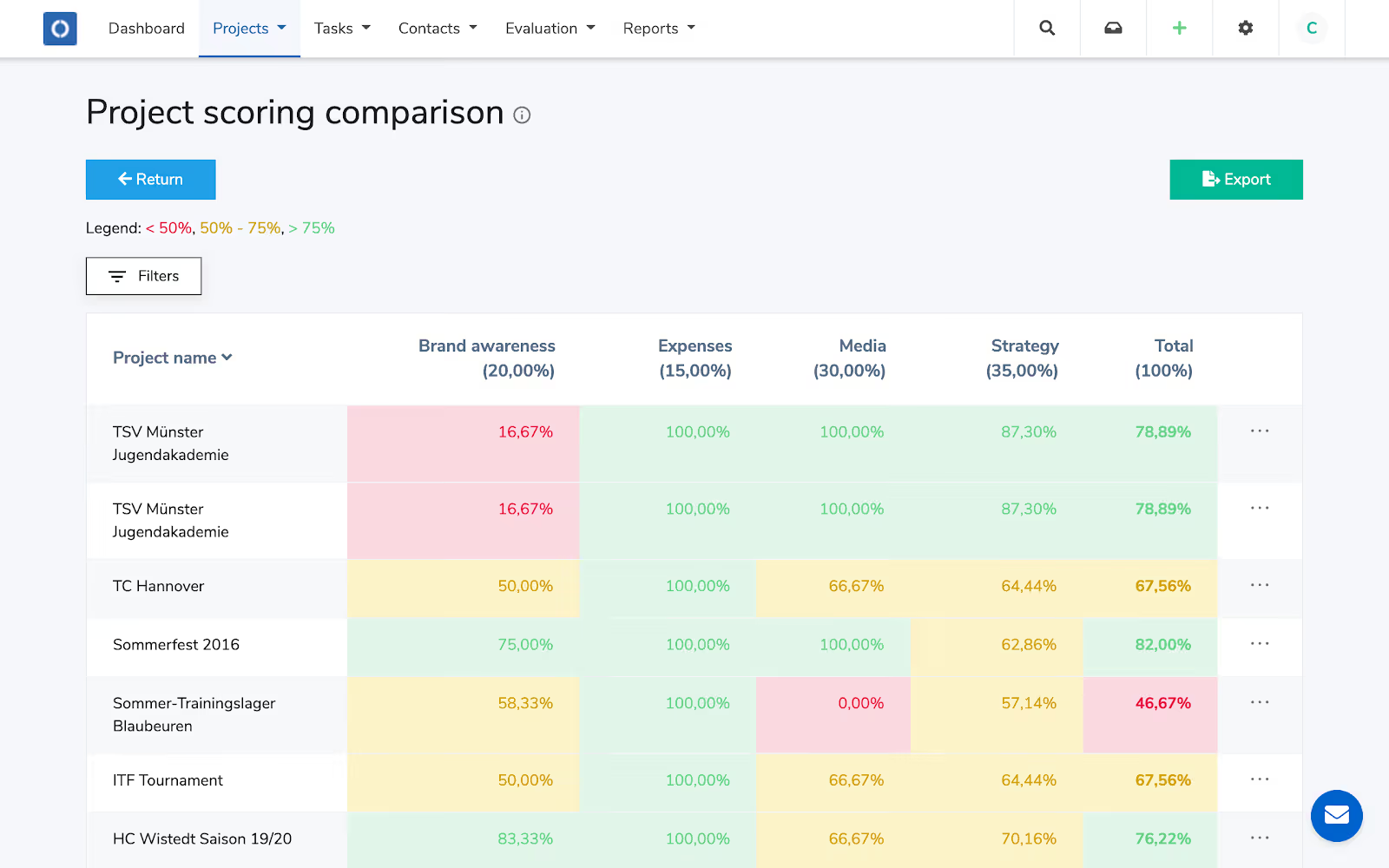
The right software adapts to your organization’s structure instead of forcing you to change it. It should be intuitive, secure, and designed for collaboration.
Before choosing a platform, ask three questions:
- Does it centralize all my sponsorship data?
- Does it help me measure ROI easily?
- Can my team use it without extensive training?
An ideal tool lets you plan, manage, and evaluate sponsorships in one ecosystem. Features like customizable dashboards, real-time reporting, and financial tracking make it easier to prove impact and scale your operations.
That is where Optimy stands out: a solution designed for companies and corporate foundations that want measurable, compliant, and efficient sponsorship programs. It helps teams automate what used to take hours and focuses their time on building stronger partnerships.
Sponsorship Management System vs Grant Management System
Sponsorships and grants both involve financial partnerships, but they serve very different goals. Understanding the difference helps organizations choose the right system for their needs.
A sponsorship management system is designed for companies that want to build business partnerships. It helps manage collaborations that promote a brand, support events, or engage communities in ways that generate mutual value. These programs focus on visibility, customer engagement, and measurable ROI.
A grant management system, on the other hand, is meant for organizations that distribute funds rather than receive them. It supports community projects, research, or social initiatives and focuses on transparency, compliance, and impact measurement.
The difference is in direction: sponsorships are outward-facing, aiming to connect a brand with an audience, while grants are inward-facing, allocating resources to causes that align with a mission.
Many large companies use both. Corporate foundations often handle grants for community programs and sponsorships for brand partnerships. In that scenario, using integrated software helps maintain governance and gives leadership a unified view of all investments.
When both systems are connected, reporting becomes faster, compliance is easier to maintain, and decision-making improves across departments.
How Automation Transforms Sponsorship Management

Automation has become a cornerstone of modern sponsorship management. It reduces the time spent on repetitive work and gives teams space to focus on strategy and creativity.
The impact is immediate. Instead of manually tracking emails or updates, automation can send reminders, assign tasks, and update dashboards automatically. Financial data flows directly into reports, giving you a real-time view of spending and performance.
Automation also improves accuracy. By standardizing forms, approvals, and reports, it ensures that every project follows the same process. This consistency not only saves time but also strengthens accountability when presenting results to leadership or auditors.
Here are a few examples of what automation can handle inside a sponsorship management system:
- Application tracking and approval workflows
- Deadline and milestone reminders
- Automated ROI reports with pre-set KPIs
- Partner communication updates and feedback collection
In practice, automation makes sponsorship programs more reliable and easier to scale. It shortens the time between planning and reporting, turning months of work into days.
When combined with real-time analytics, it helps organizations make faster decisions, measure impact accurately, and prove that sponsorships contribute directly to business goals.
Working With a Sponsorship Management Agency
Many organizations choose to work with agencies that specialize in sponsorship management. The right partner can make a significant difference, especially when you need expertise, market insights, or access to existing sponsor networks.
An experienced agency understands the sponsorship landscape and knows how to connect brands and opportunities that genuinely fit. They bring negotiation skills, analytical tools, and creative strategies to ensure your partnerships are both relevant and measurable.
When selecting an agency, evaluate:
- Experience and sector knowledge: Do they understand your industry and audience?
- Clients and case studies: Have they delivered measurable results for similar organizations?
- Services offered: Do they handle strategy, reporting, and relationship management, or only activation?
- Communication style: Can they integrate smoothly with your internal teams?
A good agency functions as an extension of your organization. They help you refine your sponsorship strategy, optimize investments, and free your team to focus on the bigger picture.
Best Practices for Managing Sponsorships
Every successful sponsorship program follows a few essential principles. These practices apply whether you manage everything internally or work with external partners.
1. Define measurable goals early
Every sponsorship should begin with a clear objective. Decide what success means — awareness, engagement, leads, or brand perception — and track progress with metrics you can verify.
2. Build trust through communication
Keep your sponsors and partners informed. Regular updates, shared dashboards, and transparency about performance build long-term relationships.
3. Evaluate partnerships regularly
After each activation, review the results. What worked, what didn’t, and what can be improved? Use data, not impressions, to make these decisions.
4. Document everything
Having a clear record of agreements, budgets, and outcomes protects your organization and makes reporting easier.
5. Use technology to simplify operations
Automating workflows and centralizing information reduce errors and delays. It also gives you the visibility to make smarter decisions in real time.
When these practices are consistent, sponsorship management stops being reactive and becomes strategic, a continuous cycle of learning and improving.
Sponsorship Reporting and Real-World Examples

Reporting is where sponsorship management proves its value. A well-structured report does more than summarize numbers. It shows how each partnership supported brand goals, generated awareness, and created measurable outcomes.
A strong sponsorship report includes:
- A summary of goals and KPIs
- Quantitative results (reach, engagement, conversions)
- Qualitative feedback from partners or participants
- Visuals like charts or impact dashboards
- Recommendations for the next cycle
Examples of great sponsorships illustrate how this looks in practice:

- Nike and the NBA built a long-term partnership that turned athletes into ambassadors and made basketball part of the brand’s identity.
- BMW’s support of the arts connects innovation and culture, aligning perfectly with its brand values.
- Patagonia’s environmental programs show how purpose-driven sponsorships can build both community and customer loyalty.
These cases highlight a simple pattern: sponsorships that work are those that are measured, managed, and continuously refined.
Conclusion
Sponsorship management it's a structured process that strengthens reputation, deepens relationships, and proves impact.
When organizations manage sponsorships with clear goals, solid systems, and reliable data, every investment becomes easier to justify and scale. Technology now makes that possible without adding complexity.
Optimy helps teams plan, track, and report on sponsorships with full visibility and automation, so no opportunity or result gets lost along the way.





















.png)

%201.png)

%201.png)