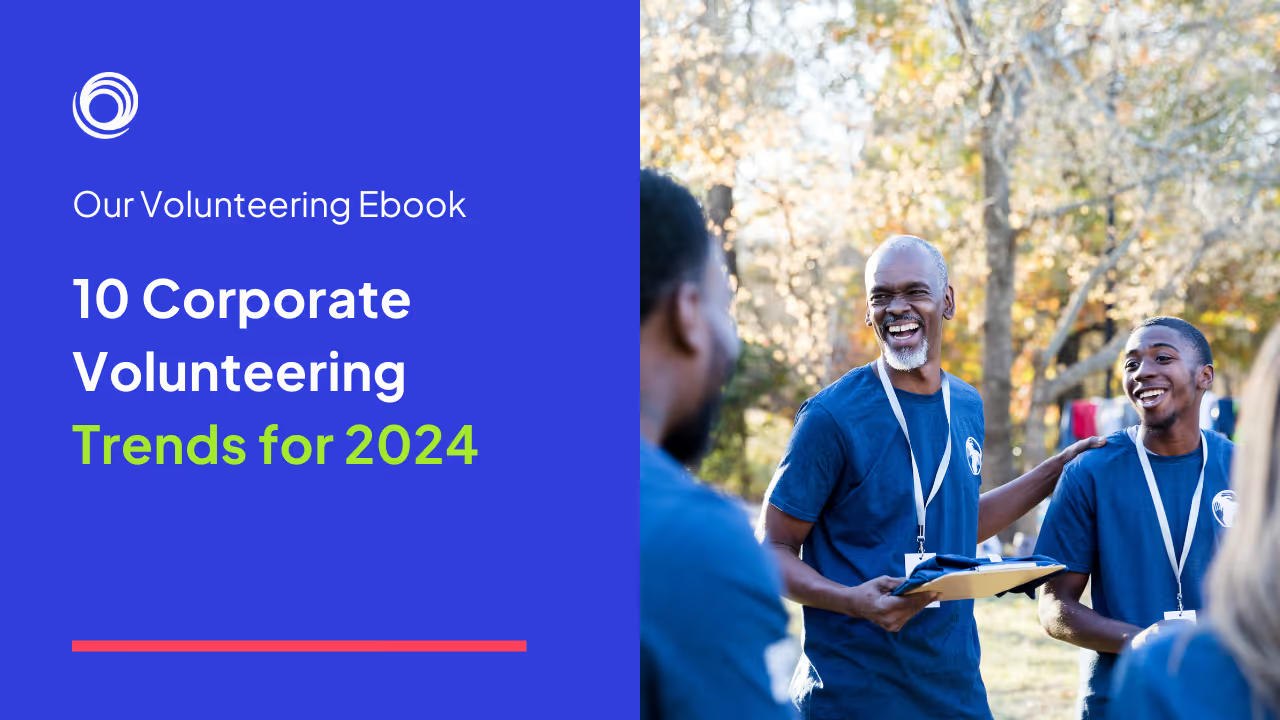

About this Ebook
Just the presence of a corporate volunteering program at your organization makes employees want to stay with your company.
But it's not enough to ensure participation in your program.
Motivating employees to participate in your volunteering program is the key to unlocking the many benefits of employee engagement practices. To help you manage a successful volunteering program in today's working environment, we've put together a guide with the major corporate volunteering trends we expect to see in 2024.
Download our guide and learn about:
- Why you need an employee volunteer program,
- 7 trends that help increase volunteering participation,
- 3 trends to help you increase participation remotely,
- Why a culture of volunteerism is good for your organization.
Get your copy today, start engaging your employees and unlock your company's potential!
Frequently Asked Questions

Other Ebooks
More practical guides for teams that run grant, sponsorship and volunteering programs and have to report on their impact. Pick the next one that fits your challenge.

How to run more Grants with less effort
Learn how to gain operational efficiency in grant management by removing manual work, reducing rework, and building systems that scale without increasing cost or risk.

How to evaluate the real impact of your grant program
Learn how to evaluate the real impact of your grant program by embedding measurability, ROI logic, and decision-ready data into day-to-day operations.

Security & Compliance in Corporate Volunteering
Learn where security and compliance gaps emerge in corporate volunteering and how identity decisions determine exposure long before incidents occur.